

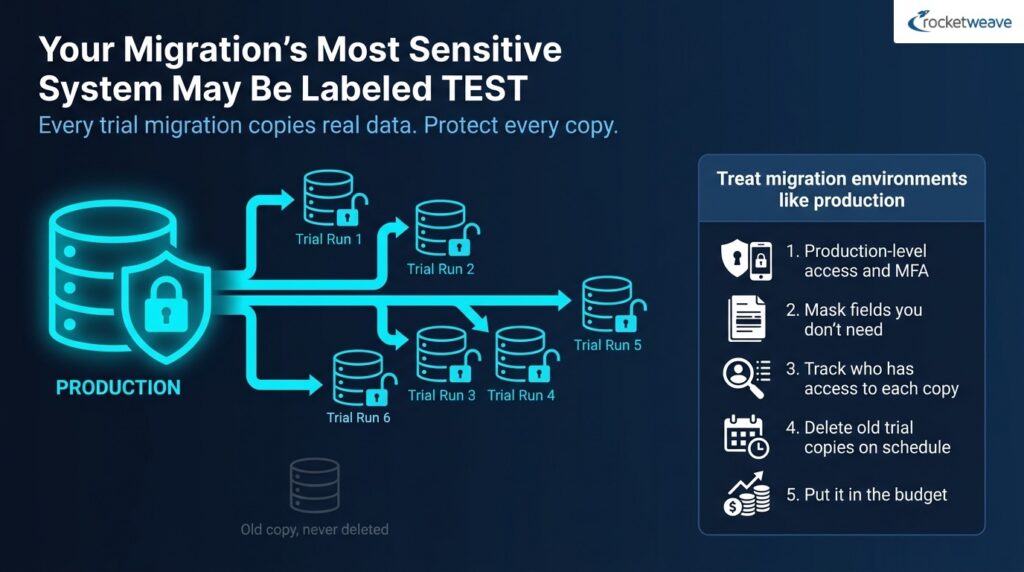
Your Migration’s Most Sensitive System May Be Labeled TEST
A few weeks ago I wrote about how much history to migrate after an acquisition. There’s a second reason to migrate less: every trial migration makes another copy of it. In January 2024, Microsoft disclosed that a Russian state-sponsored group had accessed corporate email, including…
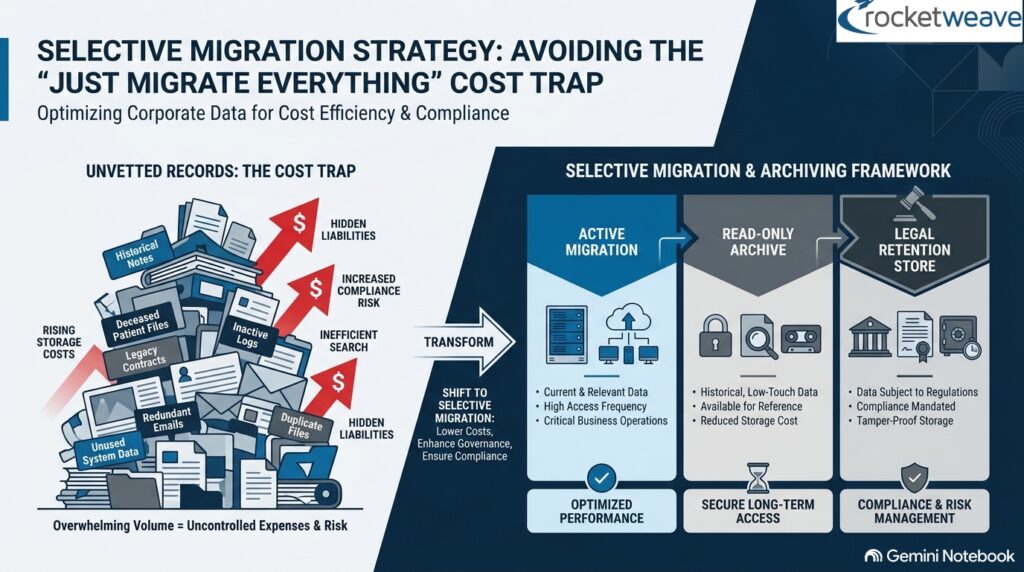
How Much History Should You Migrate After an Acquisition?
“Just migrate everything” is one of the most expensive sentences you can say at a data migration kickoff. It sounds safe, since nobody gets blamed for keeping history. A published case from Geisinger shows why it often isn’t the right call. When Holy Spirit Hospital…
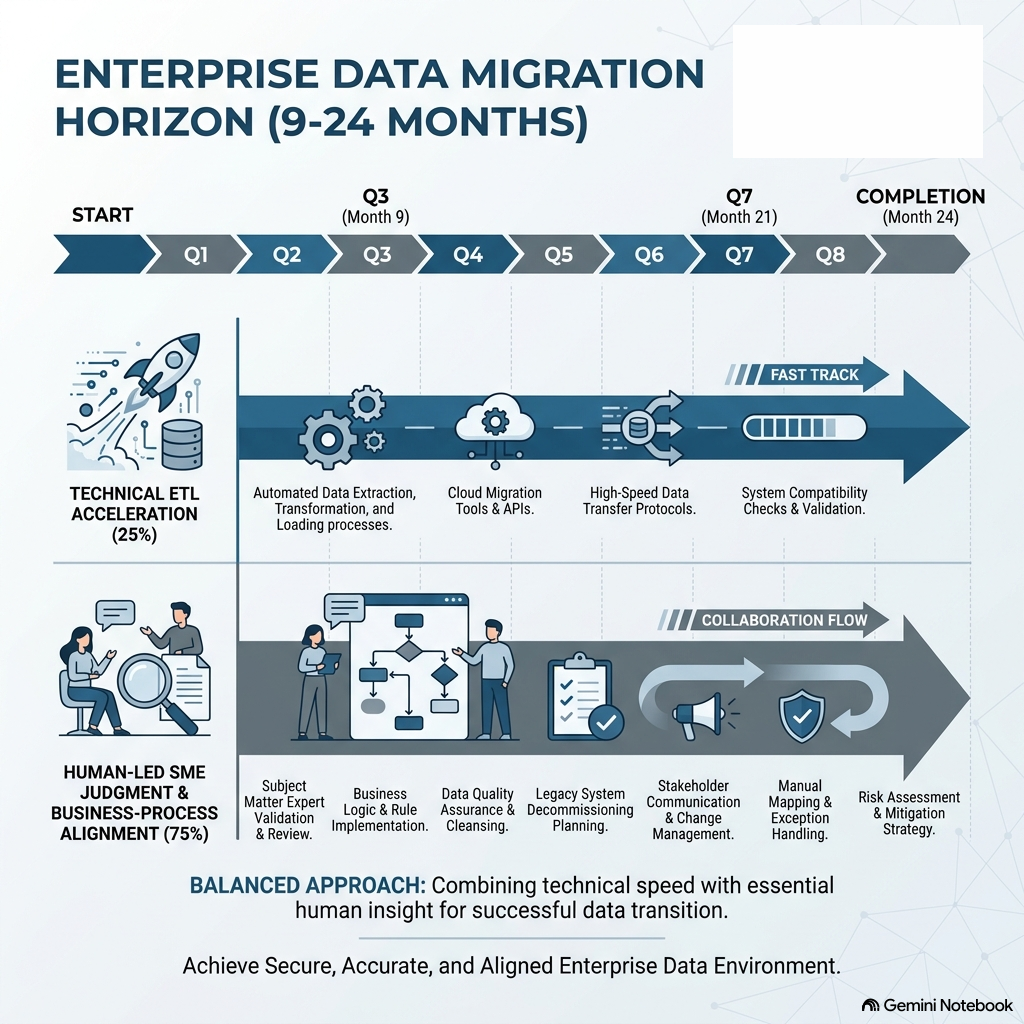
What “On Track” Actually Looks Like: Realistic Timelines for Post-Acquisition Data Migration
Plenty of enterprise data migrations get declared a success at go-live, only to be quietly admitted as failures six months later. The cutover banner goes up, the integration team disbands, and everyone celebrates. Then reality sets in. Financial reports fail to reconcile, business units lose…
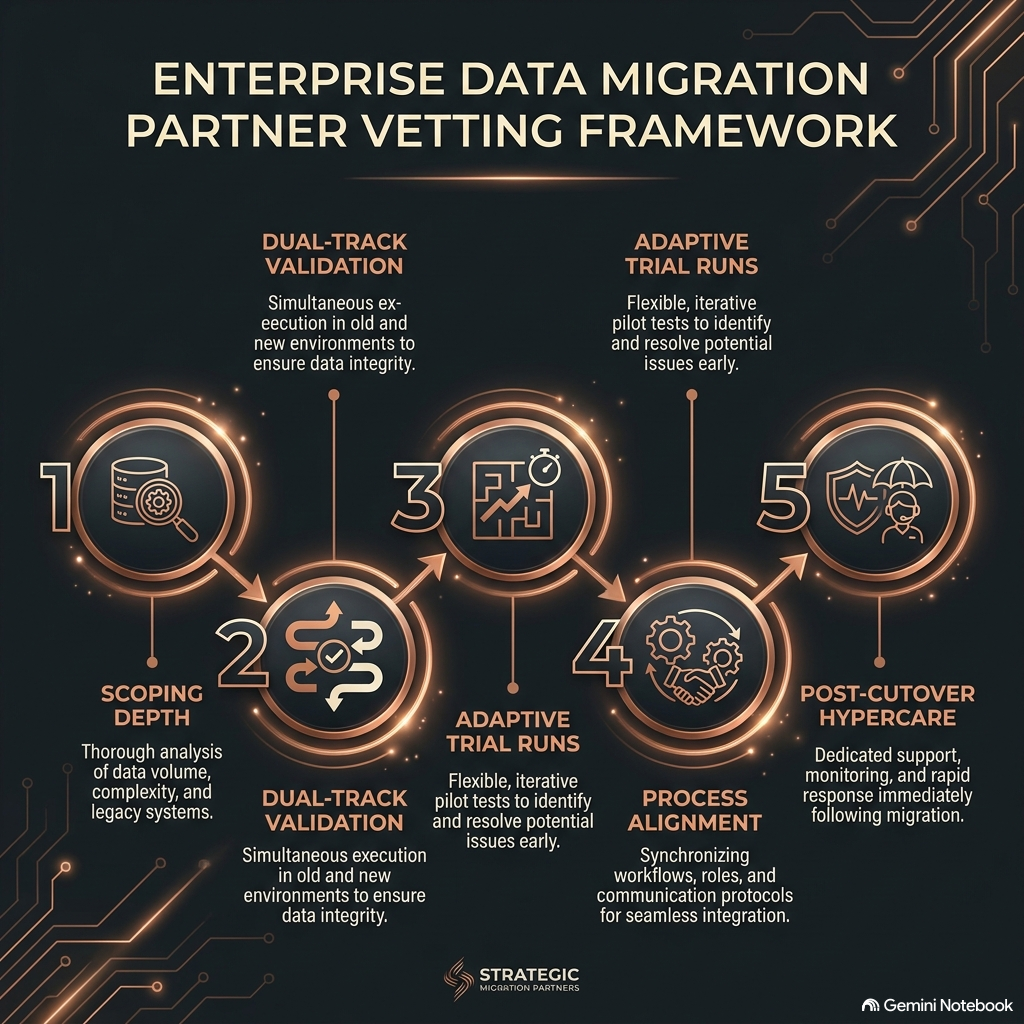
The Five Questions That Actually Reveal a Data Migration Partner’s Capabilities
When picking a data migration partner for an M&A or joint-venture integration, most deal teams ask the wrong question. They ask which firm has the best credentials or the lowest rate card. The question that actually matters is whether that firm possesses the specific operational,…
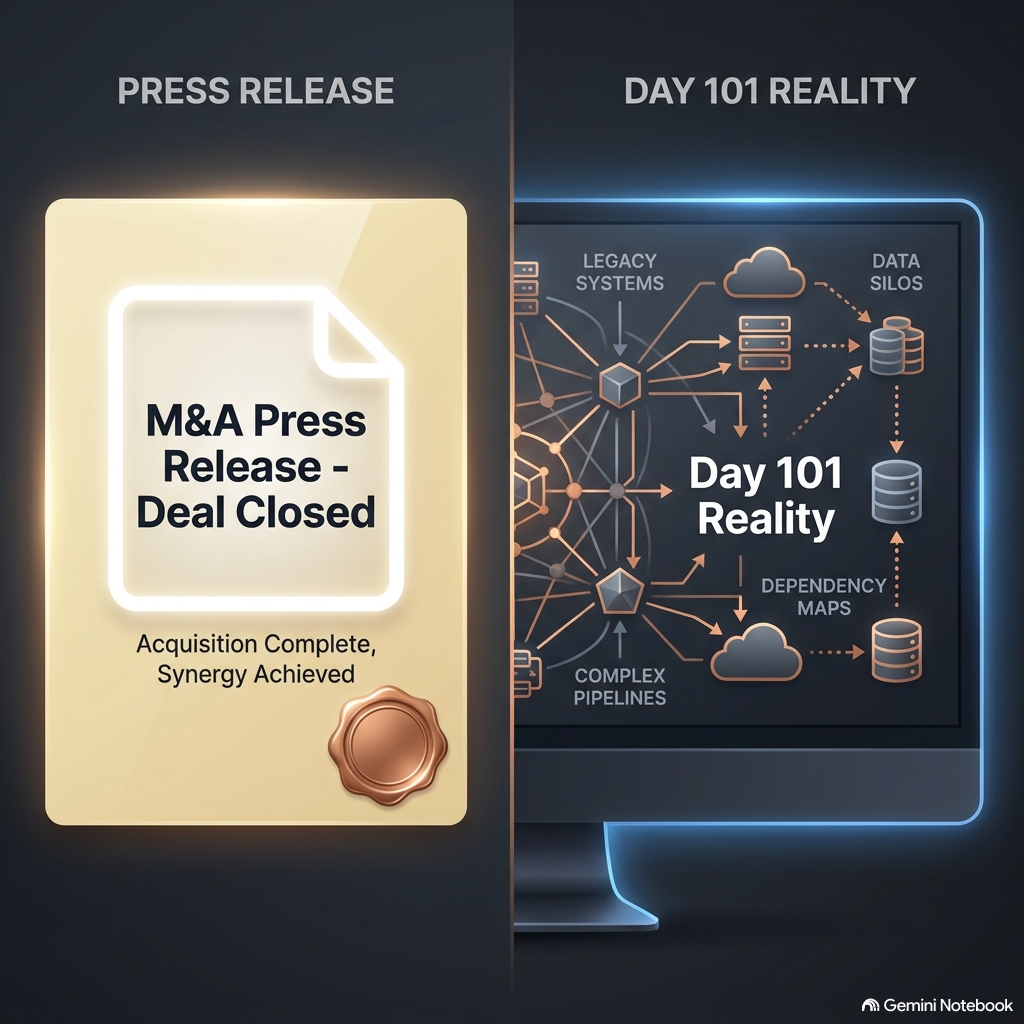
Most Post-Acquisition Data Migrations Don’t Fail on Day 1. They Fail on Day 101.
Most post-acquisition data migrations don’t fail on day one. They fail on day 101. By then, the deal has closed, the press release is old news, and the hard part starts: making two companies’ systems actually work as one. Gartner has found that 83 percent…
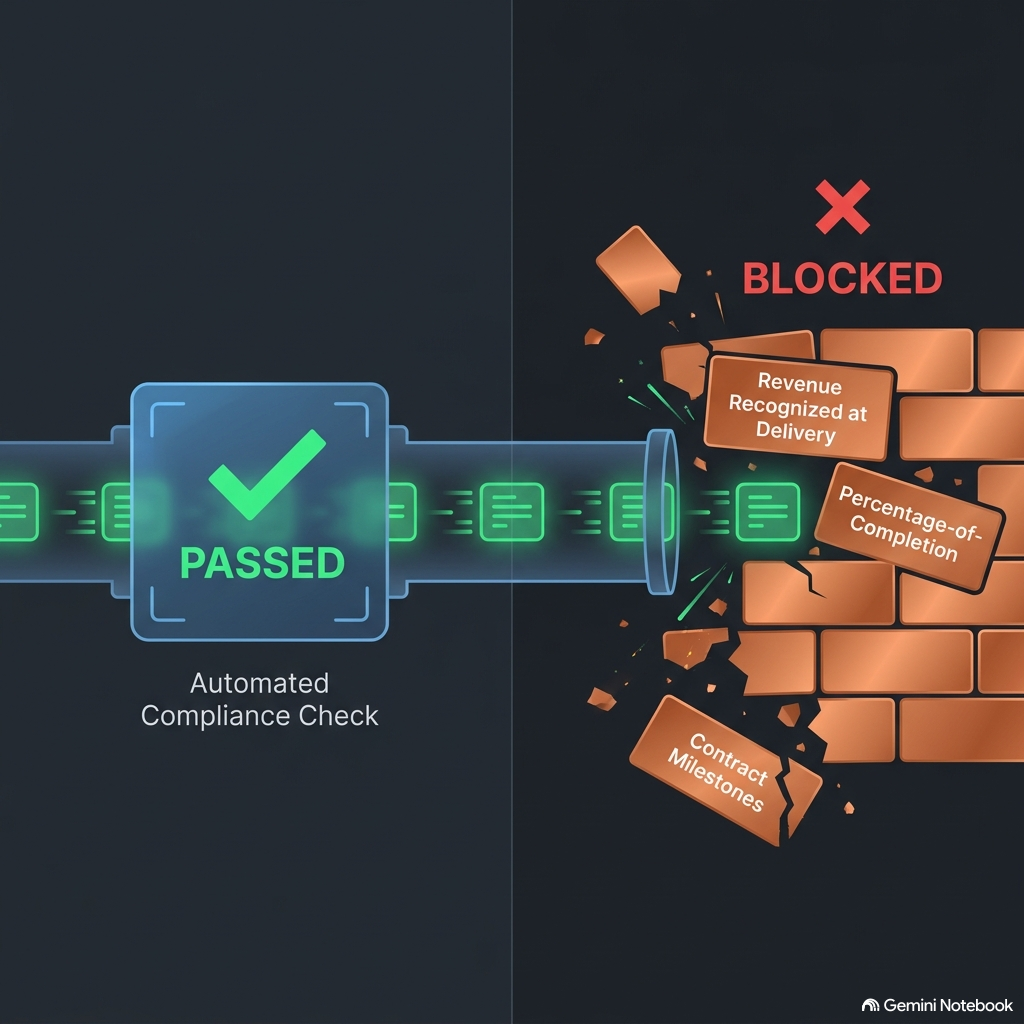
The Semantic Trap: Why Clean Data Still Breaks Daily Operations
Your data migrated cleanly. It passed every programmatic check and validation test. And yet, the moment your business teams log in, everything is wrong. Why does clean data break daily operations? Because post-acquisition migration failures rarely stem from raw data corruption. They stem from unresolved…
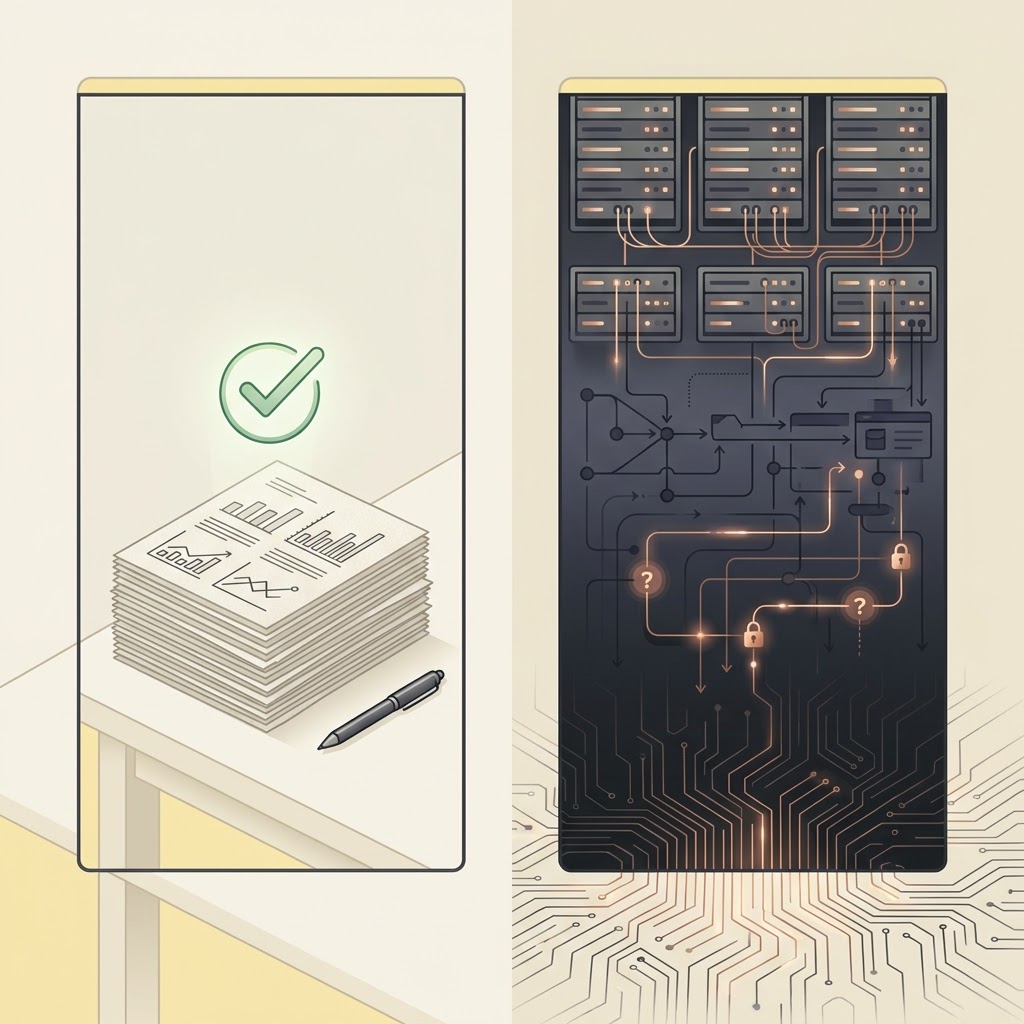
The Due Diligence Gap: What Your Deal Model Doesn’t Say About the Target’s Data
Your financial due diligence is flawless. Your legal due diligence is complete. But what does your deal model say about the target’s data? In most modern M&A transactions, technology systems are reviewed only at a high level: what platforms are in use, what the licenses…
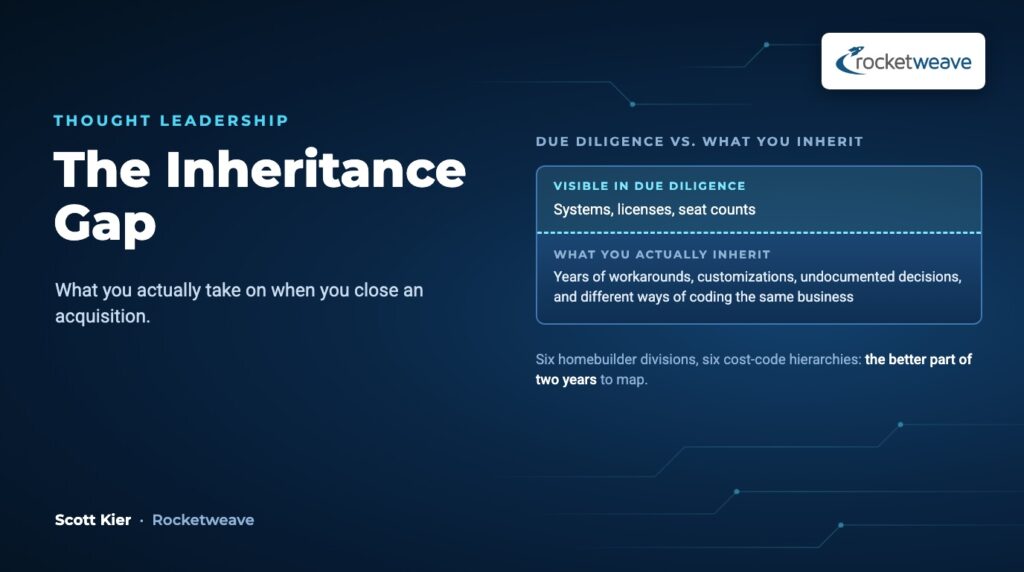
The Inheritance Gap: What You Actually Take On When You Close an Acquisition
When you are evaluating an acquisition, initial discovery reveals systems and licenses: which ERP, which CRM, how many seats. What it doesn’t show you is what’s actually inside the data underlying those systems: years of workarounds, customizations, and decisions baked in by people who left…
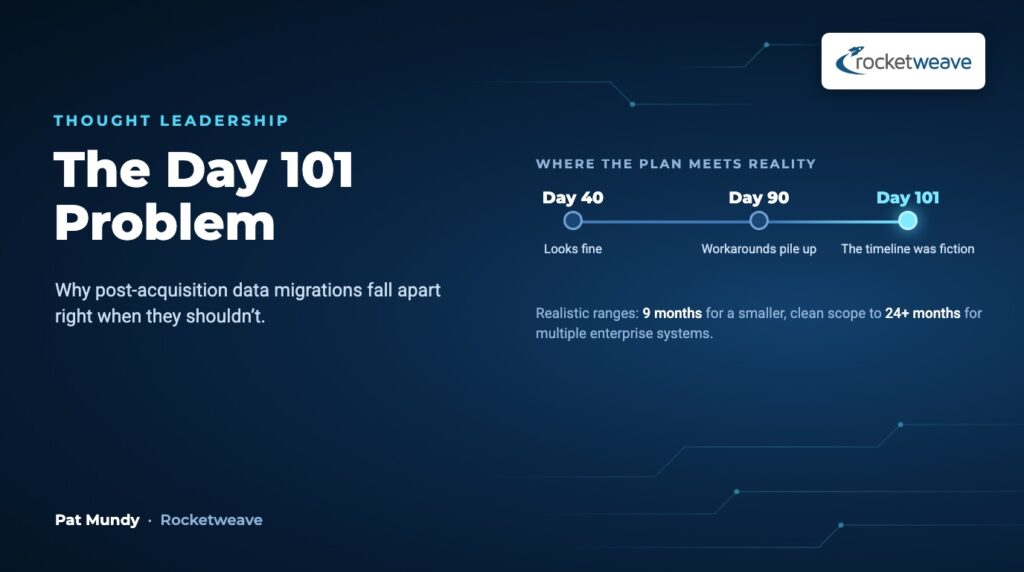
The Day 101 Problem: Why Post-Acquisition Data Migrations Fall Apart Right When They Shouldn’t
First in a series on the challenges of post-acquisition data migration. Day 40 usually looks fine. Leadership is aligned, the branding refresh has shipped, and the all-hands meeting went well. Everyone feels good about where things stand. Day 90 tells a different story. Finance is…
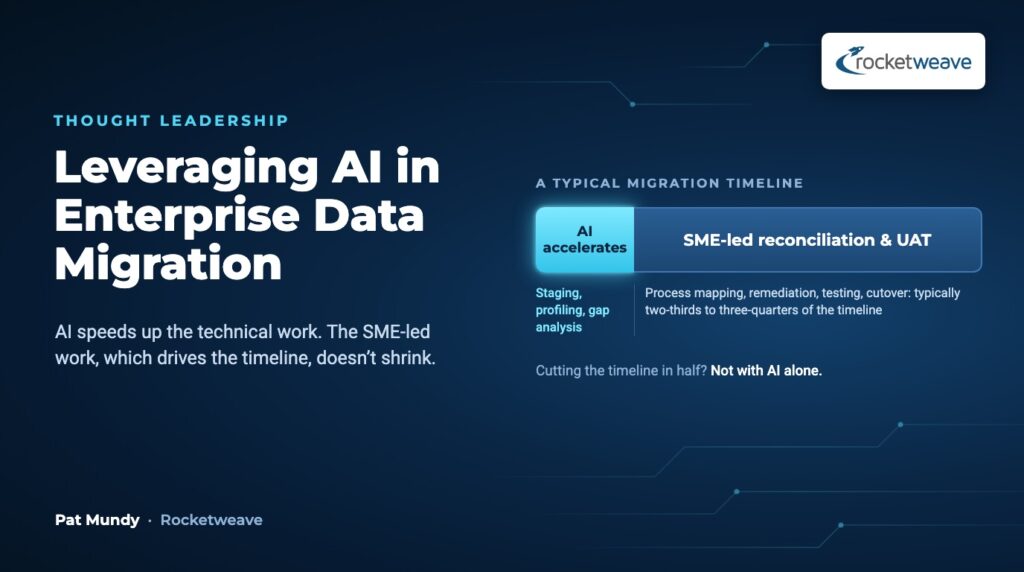
Leveraging AI in Enterprise Data Migration
I have participated in and led enterprise-scale data migration projects for the financial services, real estate, homebuilding, and healthcare industries for the better part of three decades. I’m curious about ways to leverage AI to help improve outcomes in these large projects, particularly when they…