
The Semantic Trap: Why Clean Data Still Breaks Daily Operations
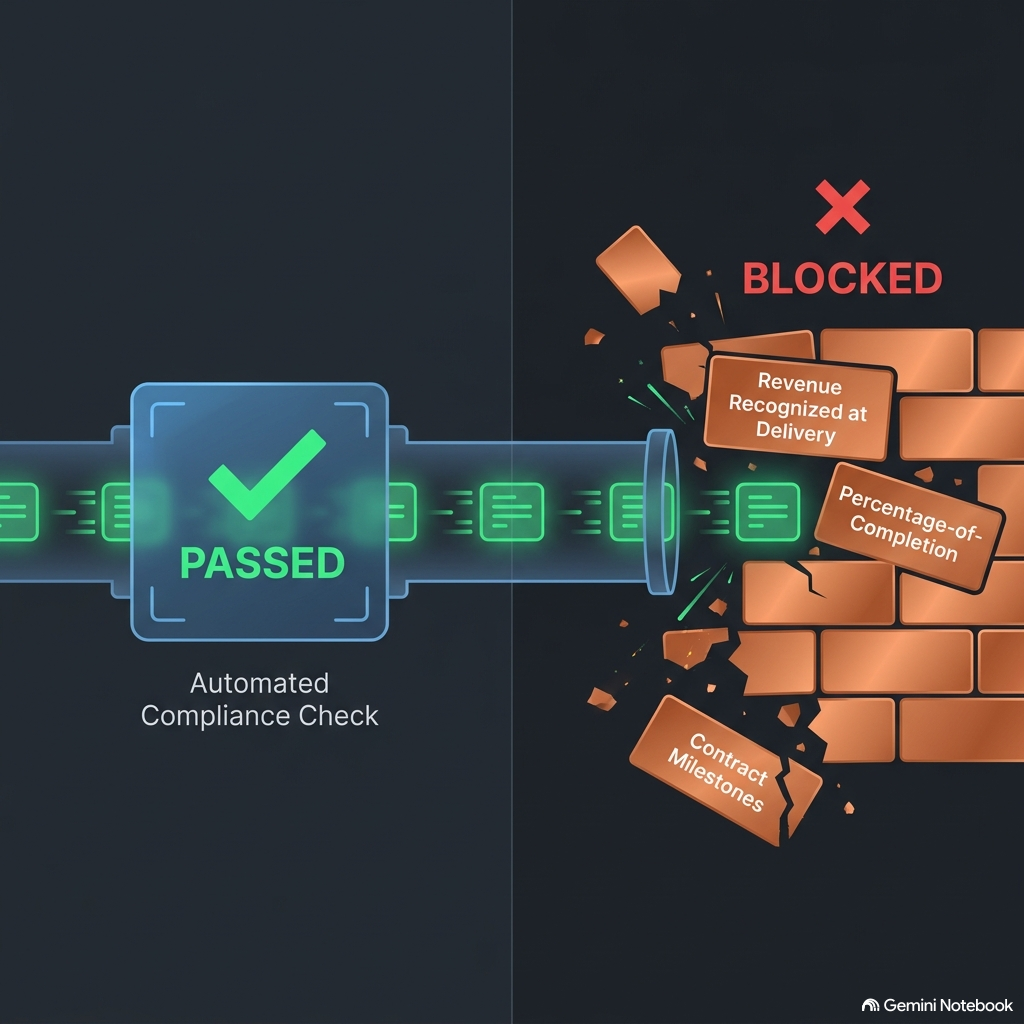
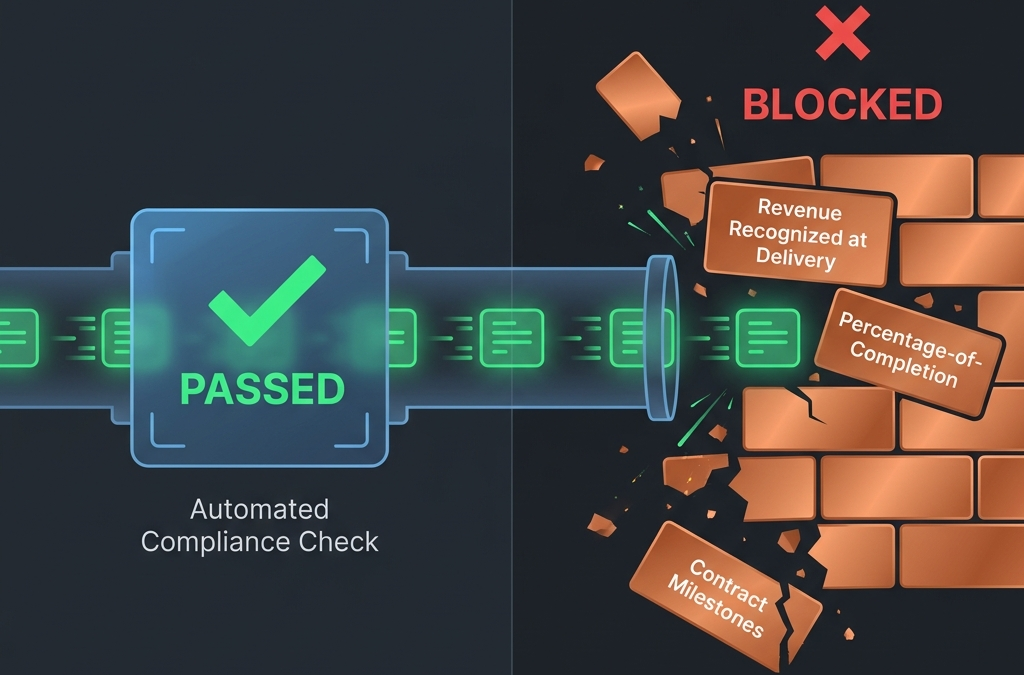
Your data migrated cleanly. It passed every programmatic check and validation test. And yet, the moment your business teams log in, everything is wrong.
Why does clean data break daily operations? Because post-acquisition migration failures rarely stem from raw data corruption. They stem from unresolved business-process misalignment.
Acquired databases don’t just store numbers. They encode different ways of doing business. If core concepts are mismatched, technical validation won’t save you. Revenue recognition might be tracked at point-of-delivery in one system and by percentage-of-completion, milestones, or subscriptions in another. Customer classification varies too: what actually defines an “active” customer, a transaction in the last 30 days or an open contract in the last 12 months? Product and contract rules differ as well, with mismatched discounting models and legacy SKUs that have no direct translation.
Moving this data isn’t a technical mapping drill. It is an active business-process decision. Records can pass programmatic checks perfectly while remaining semantically incorrect, until a frustrated customer calls, a business unit misses its forecast, or an auditor raises a flag.
A common M&A integration pitfall is letting data engineers write transformation code before a business domain’s alignment work is finished. Coding on unverified assumptions guarantees expensive, downstream rework.
To prevent this kind of Day 101 data debt, enforce a simple rule: no technical work begins on a specific domain until its business-process alignment is solid enough. Don’t stall the entire project with one massive, company-wide gate. Instead, gate domain by domain: catalog unique use cases, resolve semantic mismatches, and define destination requirements first.
It is highly counterintuitive, but slowing down the start dramatically speeds up the finish. Pipelines get built faster and cleaner, with far fewer iterations, when built on verified requirements rather than guesses.
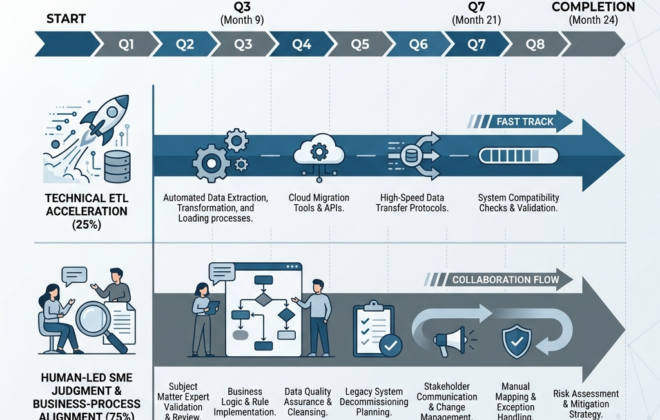
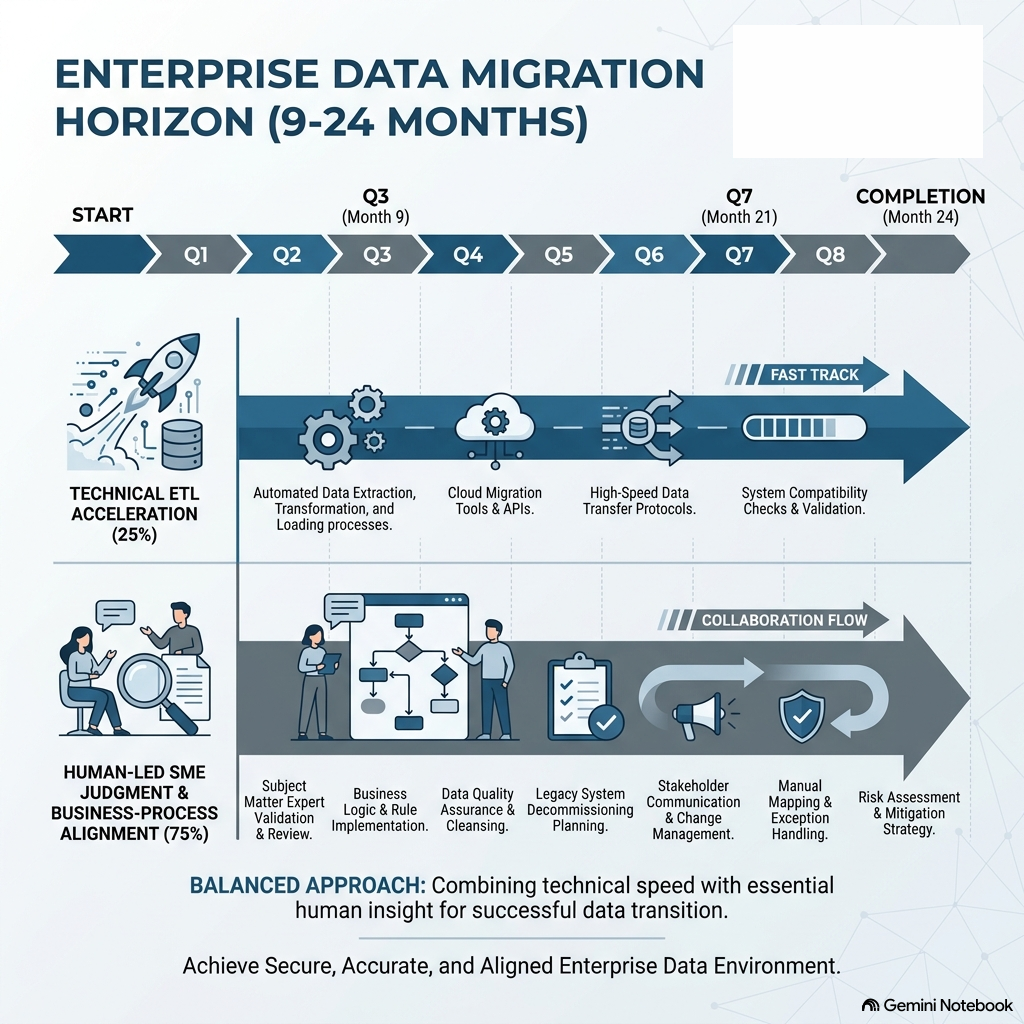
We are seeing this play out publicly right now. Charter Communications committed to launching Spectrum services to Cox customers in a rapid three-week window, but scheduled the underlying sales, billing, and back-office alignment over an eighteen-month timeline. Moving products is a sprint. Aligning human processes and billing schemas is a marathon.
Have you ever lived through a “clean” data migration that went completely sideways post-launch because of a business-definition mismatch?
Originally posted on LinkedIn.