
Data Migration News Watch: What Risant Health’s Acquisition of Cone Health Teaches Us About Hybrid Integrations
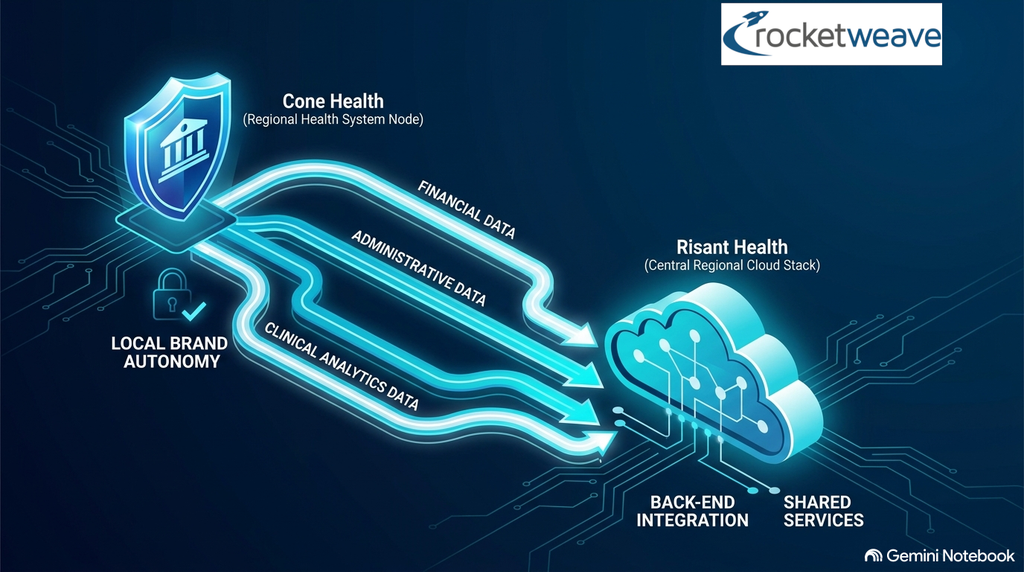
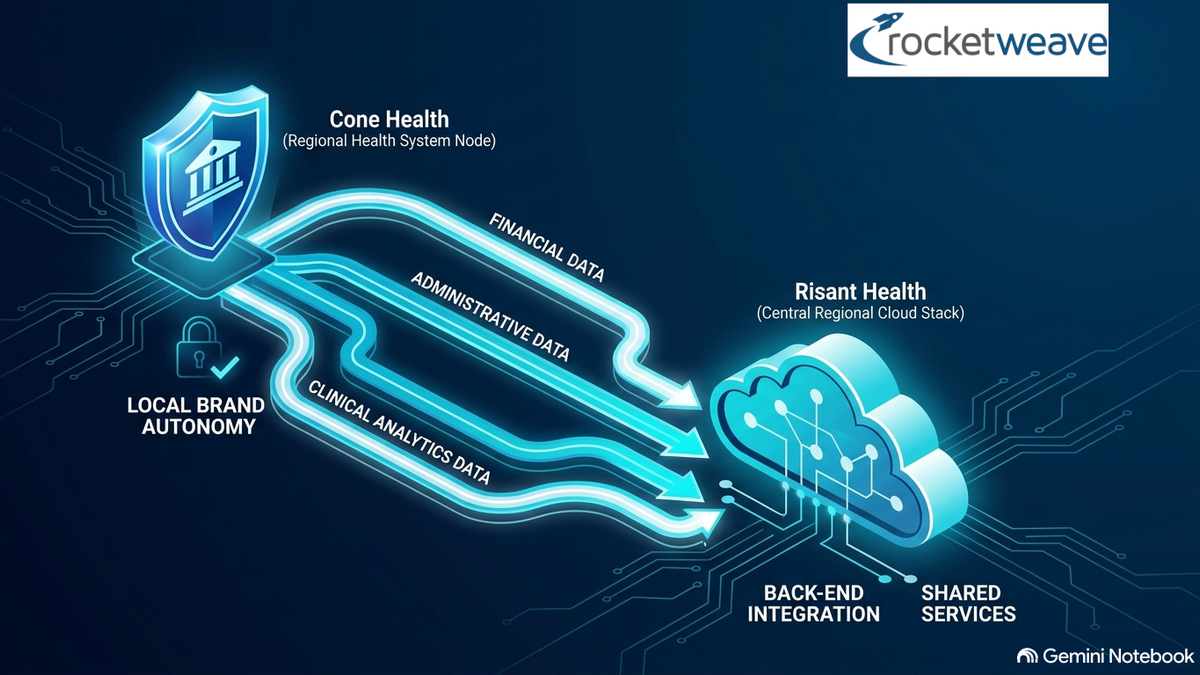
Risant Health, a non-profit subsidiary of Kaiser Permanente, recently completed its acquisition of Greensboro-based Cone Health, a five-hospital mid-cap health system generating $3.1 billion in revenue with 13,000 employees. Under the terms of the deal, Cone Health keeps its local brand, local board, and local leadership team intact.
On the surface, keeping the local brand independent looks like a light-touch integration. But when you look at the financial disclosures, a very different story emerges: Risant committed $1.4 billion in total capital, with up to $400 million specifically earmarked for technology and network platform integration.
This deal is a prime example of the mid-cap integration reality, for three reasons.
Brand autonomy does not eliminate back-end migration. Keeping the patient-facing brand untouched avoids local community friction. However, back-end general ledgers, revenue cycle workflows, and clinical analytics still have to harmonize into Risant’s shared value-based care platform. Hybrid integrations often require more careful semantic mapping than top-down overhauls, because you are connecting two live, autonomous systems.
Capitalizing platform integration realities matters. Earmarking up to $400 million over five years for technology integration signals that Risant leadership is honest with itself about what enterprise system alignment actually costs. They are not falling for the timeline fantasy of a quick, low-budget database cutover.
Protecting mid-cap SME bandwidth is essential. Cone Health operates 150-plus care locations with 1,600 providers. Those clinical controllers and operational subject matter experts cannot pause daily patient care to manually reconcile chart-of-accounts mismatches or semantic data conflicts. Protecting operational bandwidth while running structured, phased trial migrations is the only way to keep patient care stable.
What is the longest you have seen a hybrid integration run two back-end billing or ERP systems in parallel?
Originally posted on LinkedIn.