
The Five Questions That Actually Reveal a Data Migration Partner’s Capabilities
When picking a data migration partner for an M&A or joint-venture integration, most deal teams ask the wrong question. They ask which firm has the best credentials or the lowest rate card. The question that actually matters is whether that firm possesses the specific operational, semantic, and testing capabilities this particular migration requires.
Internal teams know the business inside and out, but they rarely have specialized migration experience. Deep automated profiling, transformation logic, business-process alignment, and structured UAT frameworks require dedicated practice. Underestimating that capability gap is why most enterprise organizations end up scrambling mid-project.
Before signing an SOW with an integration partner, here are five questions that uncover how they actually operate.
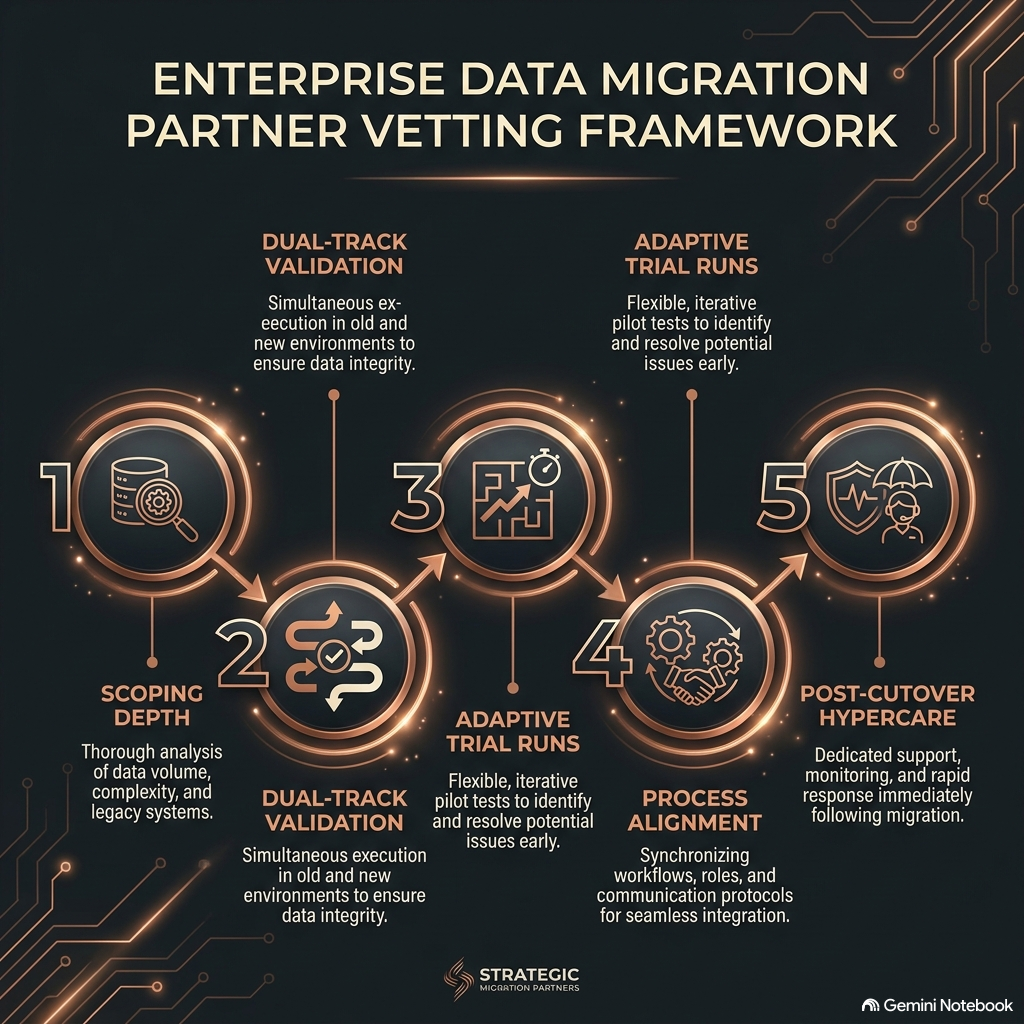
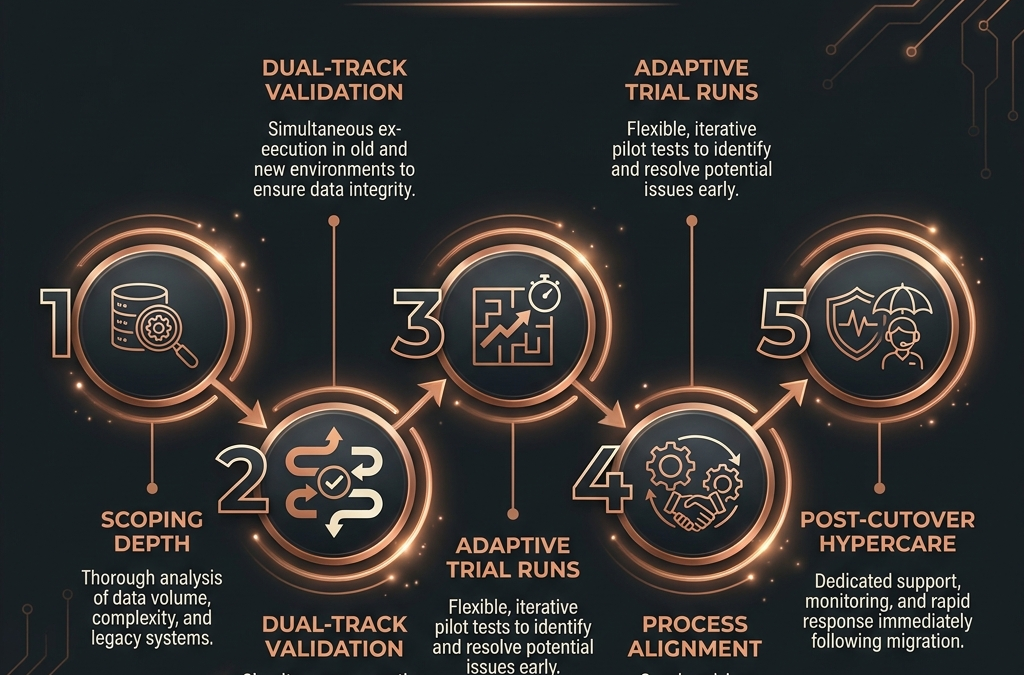
First, how do they approach scoping, and what does the deliverable look like? A capable partner dwells on methodology: automated schema profiling, use-case cataloging, and structured business-process alignment. Be wary of firms that hand over a generic list of target systems and a fixed estimate before looking at the raw data.
Second, how do they differentiate technical validation from UAT, and who owns each? They should explicitly name both tracks. Technical validation proves the data moved cleanly, meaning row counts and schema fidelity. User acceptance testing, owned by operational SMEs, proves the business can still run.
Third, how many trial migrations do they run, and what drives that number? The right answer is that it depends on acceptance thresholds. A partner committing to a fixed count before touching the data is planning around assumptions rather than iterative findings.
Fourth, how do they handle business-process misalignment between source and destination? When revenue recognition, customer definitions, or product SKUs clash, they need a clear protocol to catalog domain use cases and engage leadership to make and document decisions before coding begins.
Fifth, what does their engagement structure look like after cutover? Demand real availability for thirty to sixty days post-go-live. Even meticulous trial runs reveal edge cases once live users hit the system. A partner should stay engaged through hypercare to remediate drift, not execute a disappearing act on day one.
What’s the single most revealing question you ask when vetting technical partners?
Originally posted on LinkedIn.