
The Inheritance Gap: What You Actually Take On When You Close an Acquisition
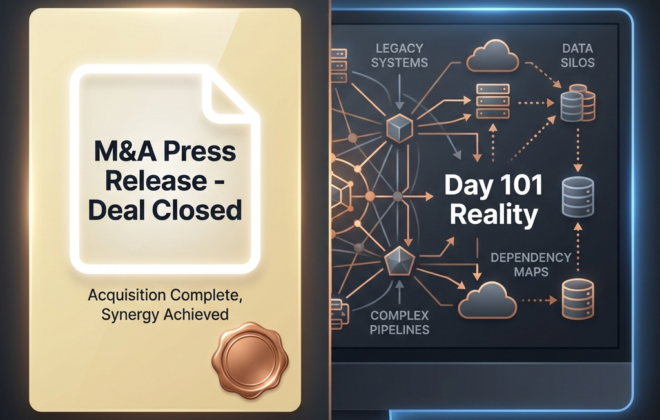
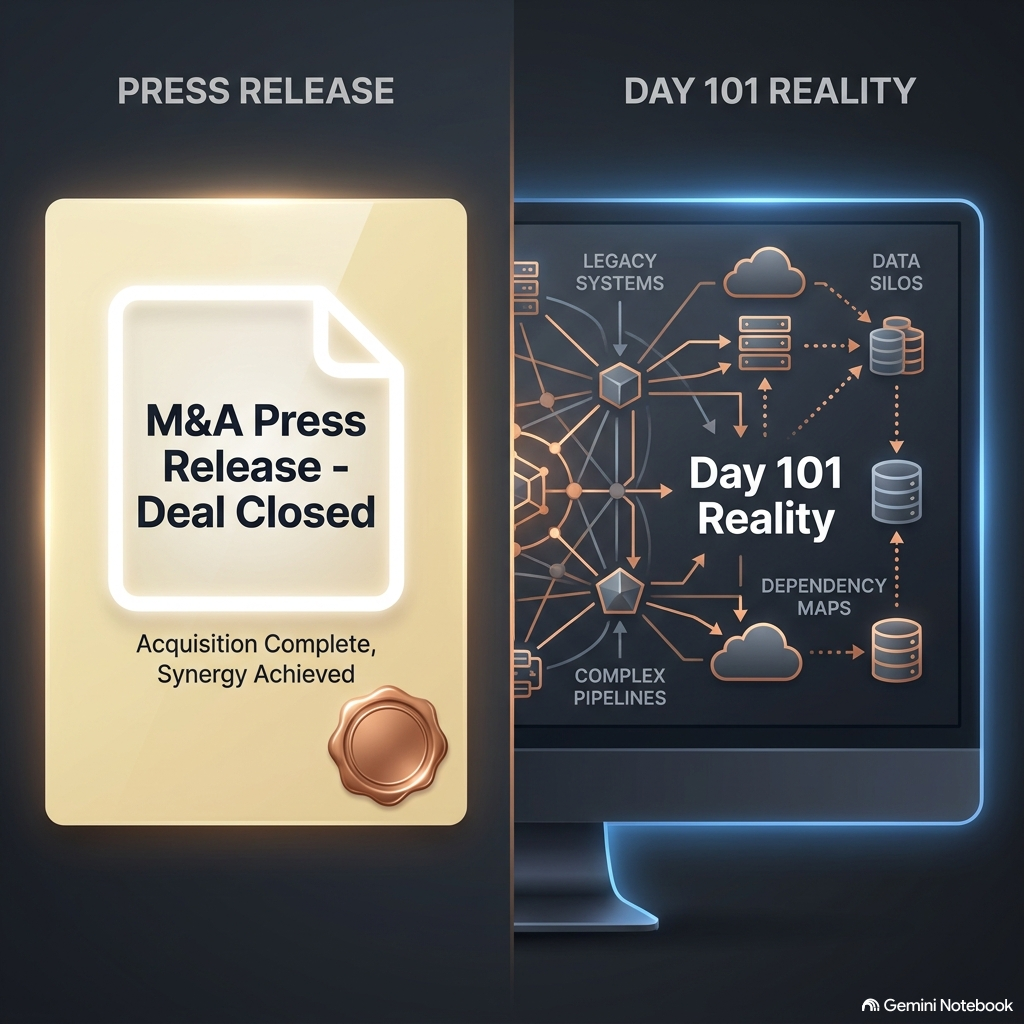
When you are evaluating an acquisition, initial discovery reveals systems and licenses: which ERP, which CRM, how many seats. What it doesn’t show you is what’s actually inside the data underlying those systems: years of workarounds, customizations, and decisions baked in by people who left the company long before your deal ever closed. What you inherit is almost certainly far from clean, and it comes with a complex and often undocumented history.
Even within very mature industries, accounting teams at different companies often take wildly different approaches to something as basic as cost codes. I worked on a project in recent years merging together six different divisions of a now top-five U.S. homebuilder. Each division’s entire cost code structure used a different hierarchy from the others. Something one division filed under a single category might be spread across several different categories in another division’s chart of accounts. This same kind of cost code mapping challenge will almost certainly exist between any acquired and acquiring company, in any industry.
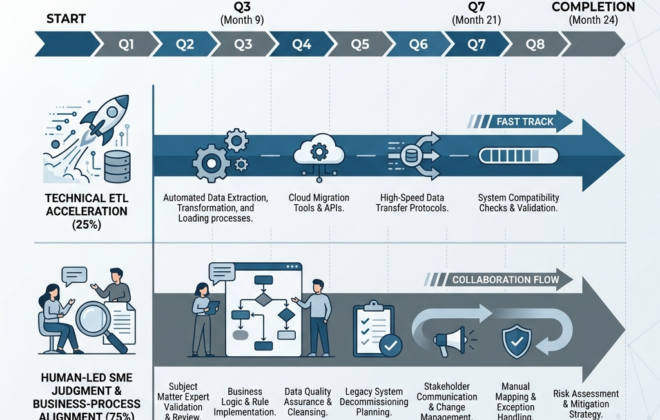
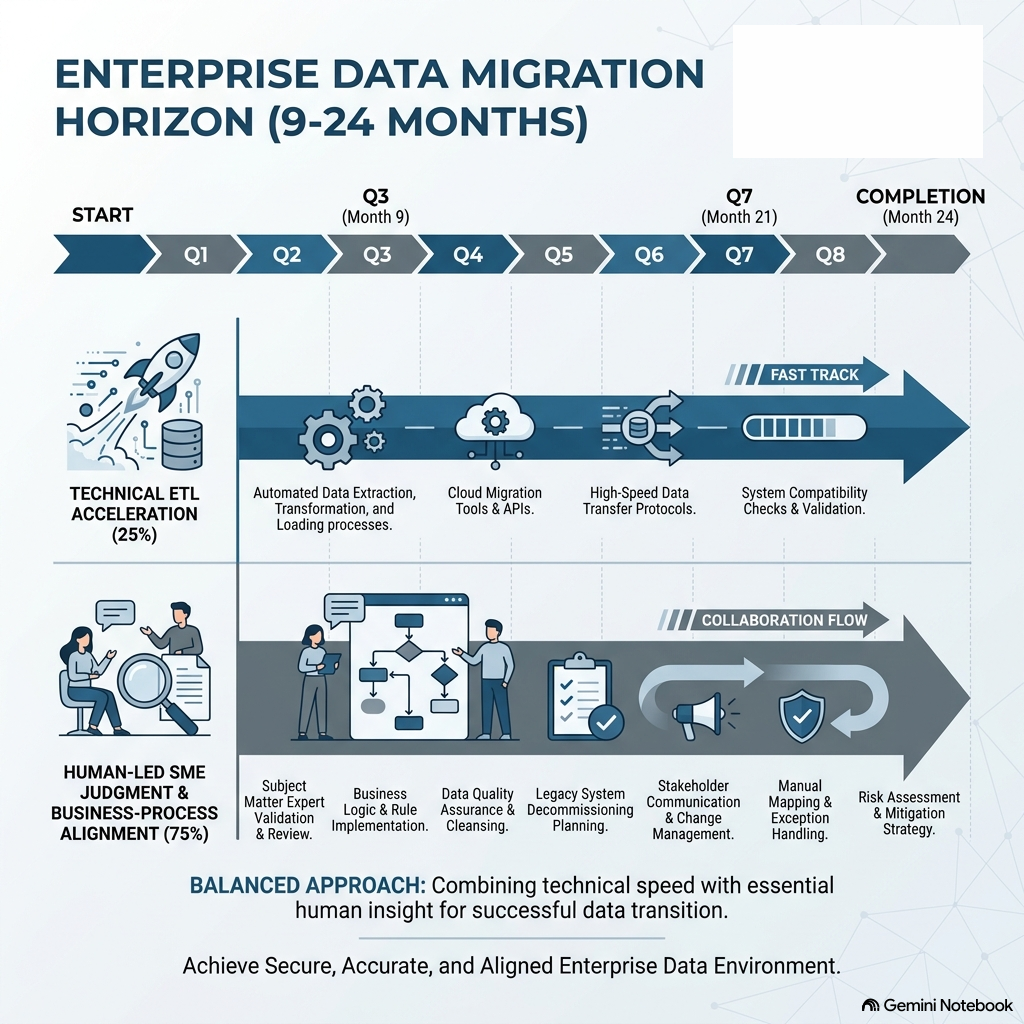
The underlying issue is that data mapping in these migrations is rarely simple, because the acquired company simply did business differently. In that homebuilder example, the cost code mapping alone took the better part of two years to fully resolve, largely because of the sheer size of the combined charts of accounts, even though each individual translation was relatively simple once the right subject matter experts worked through it. For other business processes, remediation can take a long time even when transaction volume is low, because the variations in how each side encoded its data can be extremely complex.
The practical takeaway is this: the systems and license counts you see in due diligence tell you almost nothing about the effort required to actually merge the data behind them. Profiling the inbound data estate early, and budgeting real time for the people who understand why it looks the way it does, is what keeps this kind of hidden complexity from turning into a Day 101 surprise months after close.
What challenges have you run into when profiling a newly inherited data estate?
Originally posted on LinkedIn.