

Data Migration News Watch: Charter Acquires Cox Communications and Liberty Broadband on the Same Day
On August 20, 2026, Charter Communications, Inc. (Nasdaq: CHTR) announced the closing of two simultaneous M&A transactions. One of these transactions will likely not involve an immediate major data migration. The other certainly will.
The first transaction saw Charter absorb and dissolve Liberty Broadband, a company whose principal asset was about 38.6 million shares of Charter’s own stock. Charter retired those shares while issuing roughly 33.9 million new shares directly to Liberty Broadband’s former shareholders, also picking up Alaska’s telecom provider GCI along with a modest slice of Liberty Broadband’s debt and preferred equity. GCI will likely keep operating largely as it has, an acquired subsidiary whose summarized financials fold into Charter’s ERP for consolidated reporting.
The second transaction is the acquisition of an entire competitor. Cox Communications, formerly a wholly owned subsidiary of Cox Enterprises, was purchased via cash, convertible preferred units, and common units. Charter’s own August 20 press release commits to a free year of mobile service for Cox customers not already on Cox Mobile, and to making its full Spectrum lineup available to all Cox customers by mid-September, with sales and support functions phased in over the following eighteen months.
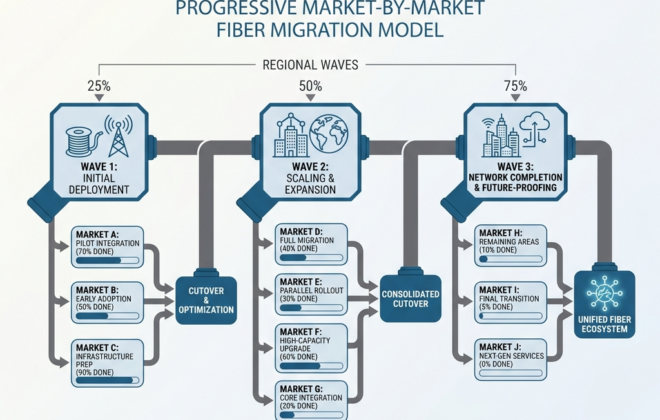
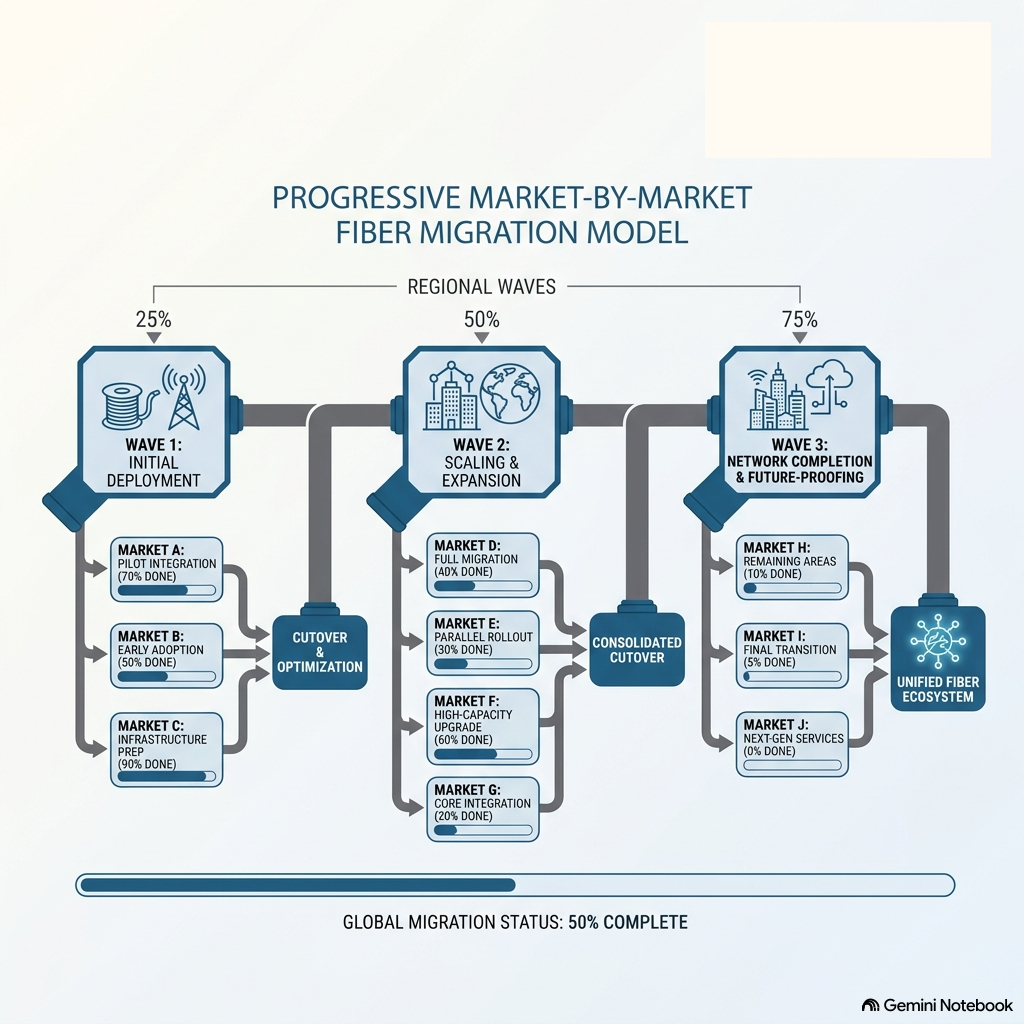
This is a daunting challenge. Cox brings along approximately 6.3 million customers across 21 states plus the District of Columbia. At minimum, the Cox data involves customer records, billing systems, network OSS, and commercial cloud and IT accounts, plus product SKUs and likely a complex renewal discounting model.
Onboarding customers immediately while systems and processes catch up later is a recipe for what we call the Day 101 Problem. Reconciling two large companies’ systems and processes takes real human time and analysis, and remediating the data gaps that analysis turns up takes even more. An aggressive timeline tempts teams into workarounds that become entrenched, and entrenched workarounds mean technical debt, operational drag, and, wherever both companies’ systems keep running in parallel, inevitable systems drift.
The sheer financial magnitude of an M&A event doesn’t signal how complex the resulting data migration will be for SMEs and data teams. Both of these are multi-billion-dollar transactions, but one will likely have negligible impact on those teams, at least in the short term, while the other will keep them extremely busy for months, if not years.
What’s your bet on how well this will go? Do you have a story about rapidly ingesting millions of customers or products into your existing systems?
Originally posted on LinkedIn.