
Most Post-Acquisition Data Migrations Don’t Fail on Day 1. They Fail on Day 101.
Most post-acquisition data migrations don’t fail on day one. They fail on day 101.
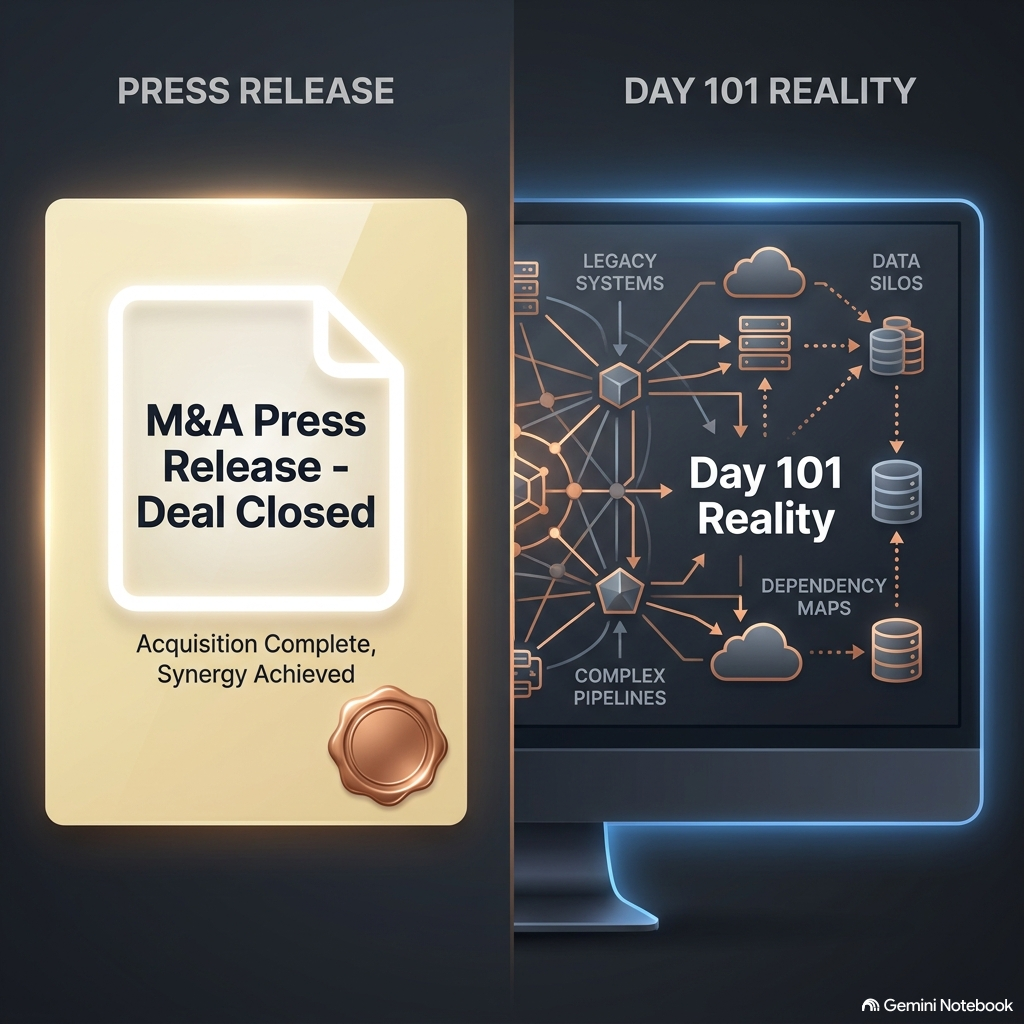
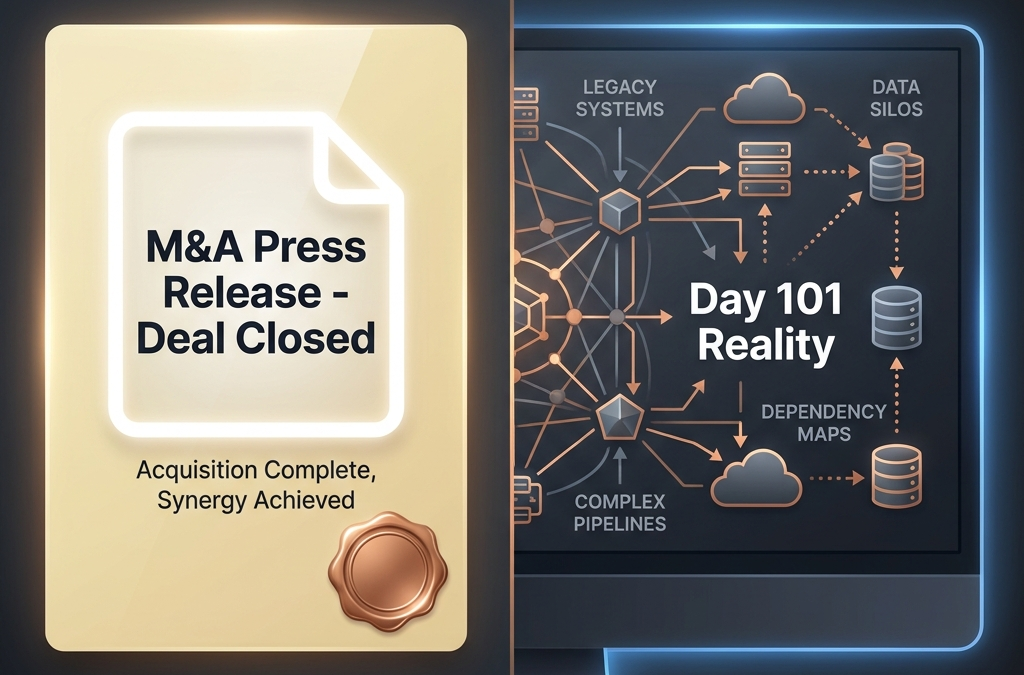
By then, the deal has closed, the press release is old news, and the hard part starts: making two companies’ systems actually work as one.
Gartner has found that 83 percent of data migration projects fail or exceed budget. The reason is almost never the technology. It’s the absence of a plan that treats migration as its own strategic project instead of a footnote to the deal.
Here is where to start if you want to stay off that 83 percent list. Map dependencies before you move anything: every dashboard, automation, and report that touches the data is a place where a silent failure can hide, so find them first. Rank the work by effort and risk, not by org chart: some systems carry direct revenue or compliance weight, so sequence those high-impact domains ahead of routine back-office cleanup. Keep the source system alive after cutover: a defined, well-governed fallback window turns a bad surprise into a non-event. Validate downstream, not just row counts: matching totals proves the data moved, but end-to-end testing proves the business still runs. Name an owner with real authority: most failures trace back to unclear ownership and fragmented decision-making, not bad technology.
None of this is glamorous. That’s exactly why it gets skipped, and exactly why it works.
What’s the one step teams in your world skip most often?
Originally posted on LinkedIn.